Stimulants are first-line treatment for attention deficit hyperactivity disorder. However, they do carry some risk of abuse and of diversion for non-clinical uses. The Prescribing Information in the USA for each of these medications carries a boxed warning (sometimes called a “black box warning”) about this. The wording is slightly different for different preparations. I’m not really sure why.

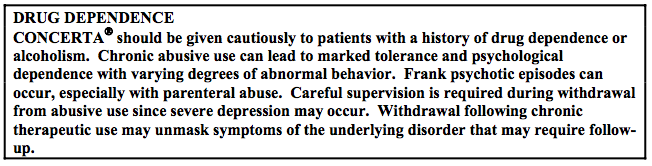
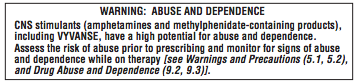
In some situations, this risk is higher, e.g., in persons with a recent history of substance abuse, in college students, etc. What should we do to try to manage this risk?
Firstly, remember that the diagnosis of Attention Deficit Hyperactivity Disorder in adults does not automatically mean that a medication has to prescribed. A specific type of psychotherapy that involves skill building is very efficacious for ADHD. In adults, executive dysfunction and disorganization are usually much more prominent than inattention. I personally learned to do this “metacognitive therapy” with my patients on a regular basis and find that it is very effective.
But when medication is appropriate (e.g., when inattention is a major problem or the disorder is severe), what are some things to keep in mind in prescribing medication for a person with ADHD when there is a higher risk of abuse or diversion? Here are some tips for a) which medication to prescribe, and for b) other strategies. Mnemonic for these strategies: L.A.M.E. D.U.C.K. LAME for choosing the medication; DUCK for other strategies.